
Cloud-Based PACS Systems: How They Simplify Image Sharing
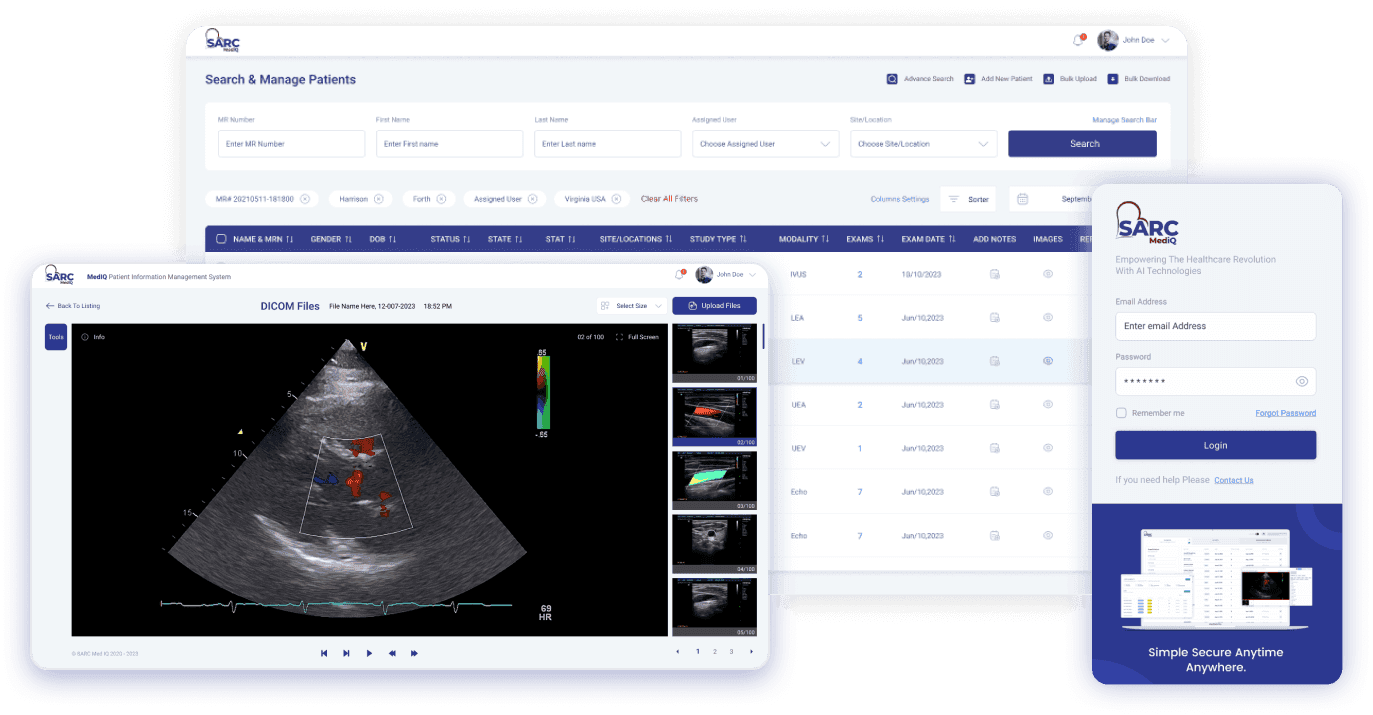
Cloud-Based PACS Systems: Simpler Medical Image Sharing for Modern Practices
A cloud-based PACS system is a picture archiving and communication system that stores, manages, and shares medical images in secure cloud infrastructure instead of on servers inside the facility. Clinicians open DICOM studies from any authorized device, while the vendor manages storage, security, software updates, and backups behind the scenes.
What Is a Cloud-Based PACS System?
Traditional PACS replaced film libraries with digital archives, but the archive still lived on local servers that the facility had to buy, house, and maintain. A cloud-based PACS system moves that entire archive, and the software that runs it, to the cloud. Modalities such as CT, MRI, ultrasound, and X-ray send studies straight to cloud storage, and anyone with permission can retrieve them in seconds.
Because the archive is no longer tied to one building, a cloud PACS system fits how care is actually delivered today. Radiologists read from home, specialists review cases across sites, and growing practices add storage without a hardware project. Many facilities pair cloud PACS with a vendor neutral archive (VNA) strategy so images from different departments and legacy systems live in one accessible record.
The model suits some specialties especially well. Cardiology groups move large echo and cath lab studies between offices and reading physicians all day. Orthopedic practices pull prior imaging into the exam room during consultations. Multi-location radiology groups balance reading volume across sites. In each case, the requirement is the same: the complete imaging history, available immediately, wherever the clinician happens to be.
How a Cloud-Based PACS System Works
The workflow starts at the modality. When a technologist completes a study, the scanner or ultrasound machine sends the DICOM images to the cloud archive, where they are indexed with the patient and order information. That order data usually arrives through an HL7 interface with the RIS or EHR, so the study lands on the right radiologist's worklist without manual entry.
From there, the reading physician opens the study in a zero-footprint viewer directly in the browser. Priors load alongside the current exam for comparison. The physician dictates or types the report, signs it, and the finalized report travels back to the EHR and the referring provider through HL7 or FHIR interfaces. At every step, the modality worklist, the archive, and the reporting tools stay synchronized, which removes the re-keying and phone calls that slow down on-premise workflows.
Structured reporting fits naturally into this flow. Measurements taken in the viewer can populate report fields automatically, and specialty templates guide the reading physician through the elements each study type requires. The result is a consistent, complete report produced in fewer steps, with the images, measurements, and narrative all stored against the same study record.
Core Features of a Cloud-Based PACS System
Cloud DICOM Storage
Cloud storage keeps every study in redundant, geographically distributed data centers rather than on a single local server. Capacity grows on demand, so a practice that doubles its ultrasound volume does not need a new storage array. Older studies stay just as accessible as new ones, with no tape libraries or off-site media to manage.
Zero-Footprint Viewer
A zero-footprint viewer runs entirely in the web browser. There is nothing to install, no plugins to maintain, and no workstation imaging projects when staff change computers. Physicians log in from a reading room workstation, a laptop at home, or a tablet on the ward and get the same diagnostic quality viewer everywhere.
RIS and EHR Integration
A cloud PACS system earns its place in the workflow through integration. HL7 feeds keep demographics, orders, and results aligned with the RIS and EHR, while FHIR APIs support newer integrations with patient portals and analytics tools. Good integration means the radiologist works from one worklist and the report reaches the chart without staff re-entering data.
AI Automation
Modern cloud platforms layer AI on top of the archive. Automation can route studies to the right subspecialist, hang priors intelligently, pre-populate measurements, and flag critical findings for priority reading. This reduces the manual sorting and setup work that consumes technologist and radiologist time between cases.
Multi-Device Access
Because the system is browser based, the same study is available on a desktop, tablet, or phone with full fidelity. That flexibility supports teleradiology, on-call coverage, and tumor boards where several specialists review the same images from different locations at the same time.
Security and Compliance
Cloud PACS vendors operate under HIPAA business associate agreements, encrypt images in transit and at rest, and log every access. Leading platforms also hold SOC 2 certification, which audits their security controls over time. For most practices, this level of protection exceeds what a small in-house server room can deliver.
How Cloud PACS Simplifies Medical Image Sharing
Image sharing is where cloud-based PACS systems deliver their most visible improvement. The older methods were never designed for speed. Staff burned studies onto CDs that patients carried across town, and discs were lost, damaged, or unreadable on arrival. Email attachments ran into file size limits and security concerns. Faxed reports arrived without the images at all. Each handoff added delay, and delays compound when several specialists need the same study.
A cloud-based PACS system replaces that chain with a secure link. The practice selects the study, generates a share link or grants portal access, and the recipient views the full diagnostic quality images in a browser. Nothing ships, nothing installs, and access can be time limited or revoked. Referring physicians see images the moment they are shared instead of days later, so treatment decisions move faster.
Sharing also works in the other direction. Outside facilities can push prior studies into the cloud archive before a patient arrives, giving the care team a complete imaging history at the first appointment. Patients benefit as well: instead of guarding a CD, they can view their images through a secure portal and share them with any provider they choose. For multi-site groups, internal sharing becomes trivial because every location reads from the same archive rather than transferring files between separate PACS installations.
Second opinions show the contrast most clearly. Under the old workflow, a patient requesting a review at another institution waited while records departments located the study, burned a disc, and shipped it, then repeated the process when the disc failed to load. With cloud sharing, the receiving specialist opens the same study from a link the same day, often while the patient is still scheduling the consultation.
SARC PACSflow, the cloud PACS platform from SARC MedIQ, was built around this sharing workflow. Images are available instantly to radiologists, referring physicians, and patients from one system, which is a central reason practices report image review and reporting time falling by up to 80 percent after moving away from disc based and manual sharing.
Benefits of a Cloud-Based PACS System
The benefits cluster around time, cost, and reliability. Faster access and automated routing cut image review and reporting time by up to 80 percent, according to outcomes reported by practices using SARC PACSflow. When radiologists finish studies sooner, referring physicians get answers sooner, and patients start treatment earlier.
The cost picture is equally concrete. Eliminating physical storage, disc burning, courier runs, and manual recordkeeping saves a reported $100 to $150 per report compared with traditional workflows. Higher throughput then compounds the gain: practices report more than $150,000 in additional annual revenue because the same team completes more studies per day. These figures are reported outcomes rather than guarantees, and results vary by specialty and volume, but they show why the economics favor the cloud once a practice grows past a single reading room.
Reliability rounds out the case. Cloud archives replicate data across facilities, so a hardware failure, flood, or ransomware incident at one site does not take the imaging record down with it. Disaster recovery is part of the service rather than a separate project the practice must design and test on its own.
How to Choose a Cloud PACS System
Vendor selection matters more than any single feature. Use this checklist when comparing cloud PACS vendors:
- Compliance and security: Confirm the vendor signs a HIPAA business associate agreement, encrypts data in transit and at rest, and holds SOC 2 certification.
- Integration depth: Verify live HL7 interfaces with your RIS and EHR, FHIR support for newer connections, and automated modality worklist support.
- Storage terms: Check whether storage is truly unlimited or metered, how priors are migrated, and what data export looks like if you ever leave.
- Viewer performance: Test the zero-footprint viewer with your largest studies. Scrolling and cine playback should stay smooth on ordinary connections.
- Sharing tools: Make sure referring physicians and patients can view shared studies without accounts or installs on your side of the workflow.
- Support quality: Ask about support hours, response times, and whether support staff understand imaging workflows, not just software.
- Pricing model: Compare per-study, per-user, and flat subscription pricing against your volume, and confirm what migration and training cost.
A short pilot with real studies from your own modalities will reveal more than any demo script, so ask finalists to run one.
SARC PACSflow: A Cloud-Based PACS System Built for Sharing
SARC PACSflow combines cloud DICOM storage, a zero-footprint diagnostic viewer, and deep RIS and EHR integration in one platform. It scales from a single specialty clinic to a multi-site hospital network without new hardware, and its AI-driven automation reduces the manual steps between image acquisition and signed report. Advanced image processing tools support precise measurement and confident diagnosis across cardiology, radiology, vascular, and other imaging heavy specialties.
For practices, the practical difference is consolidation. Storage, viewing, reporting, and sharing live in one system from SARC MedIQ, supported by a team that works exclusively in medical imaging. That is the model behind the outcomes cited above: reporting time cut by up to 80 percent, $100 to $150 saved per report, and throughput gains worth more than $150,000 a year for busy practices.
A Better Experience for Patients
Patients feel the difference in quieter ways. Centralized records reduce unnecessary repeat scans, because a prior study is available instead of being reordered. Faster reporting shortens the anxious gap between the scan and the treatment plan. And secure portal access lets patients see their own images and share them with a second opinion provider without requesting a disc and waiting for the mail.
There is also a practical convenience factor. Patients no longer act as couriers for their own records between offices, and front desk staff field fewer calls from patients and outside practices chasing studies. When imaging follows the patient automatically, appointments run closer to schedule and consultations start with the full picture already in hand.
Conclusion
Cloud-based PACS systems have moved medical imaging past the limits of local servers, burned discs, and emailed files. The right system stores every DICOM study securely, opens it instantly on any device, connects cleanly to the RIS and EHR, and makes sharing with colleagues and patients a matter of one secure link. If your current workflow still depends on physical media or manual transfers, a cloud PACS can remove that friction while cutting reporting time and cost. Book a 30-minute demo to see how SARC PACSflow handles your studies, your integrations, and your sharing needs.
Frequently asked questions
A cloud-based PACS system is a picture archiving and communication system hosted in the cloud rather than on servers inside the facility. It stores DICOM images from modalities such as CT, MRI, and ultrasound, and lets authorized clinicians view, report, and share them from any device through a browser. The vendor manages storage, security, updates, and backups, so the practice needs no imaging servers of its own.
An on-premise PACS runs on hardware the facility buys, houses, and maintains, and access is usually limited to the local network. A cloud-based PACS system removes the hardware, replicates data across data centers, and gives clinicians secure access from anywhere. Updates arrive automatically, storage scales on demand, and disaster recovery is built in rather than managed by in-house IT staff.
Yes, when the vendor operates as a HIPAA business associate and applies the required safeguards. A compliant cloud PACS encrypts images in transit and at rest, enforces role based access, and logs every study view. Buyers should confirm the vendor will sign a business associate agreement and ask about independent validation such as SOC 2 certification, which audits security controls over time.
Cloud PACS systems replace CDs, couriers, and oversized email attachments with secure links and portal access. The practice shares a study, and the referring physician or patient opens the full diagnostic quality images in a browser with nothing to install. Access can expire or be revoked, every view is logged, and multi-site groups share internally from one archive instead of transferring files between systems.
Start with compliance, integration, and viewer performance: a signed HIPAA agreement, live HL7 and FHIR interfaces with your RIS and EHR, and a zero-footprint viewer that handles your largest studies smoothly. Then check storage terms, prior study migration, sharing tools for referrers and patients, support responsiveness, and the pricing model. A pilot using your own studies is the most reliable final test.

Colin McCann, Ph.D.
Colin McCann, Ph.D., is the Co-Founder and CTO of SARC MedIQ, where he leads AI and healthcare imaging technology initiatives. His background spans machine learning, computer vision, cloud healthcare infrastructure, and large-scale medical data systems, with prior research experience at the National Institutes of Health and the University of Maryland. He specializes in building scalable AI-driven solutions for medical imaging, reporting, and healthcare workflow automation.

Never miss an insight that matters
Subscribe to get the latest articles, case studies, and product updates delivered straight to your inbox.
Ready to modernize your practice?
Discover how MedIQ and optional modules can streamline your workflow, improve efficiency and modernize your practice.
Book 30-min demo