The Clinician’s Definitive Guide to Selecting AI Medical Imaging Solutions
April 9, 2026
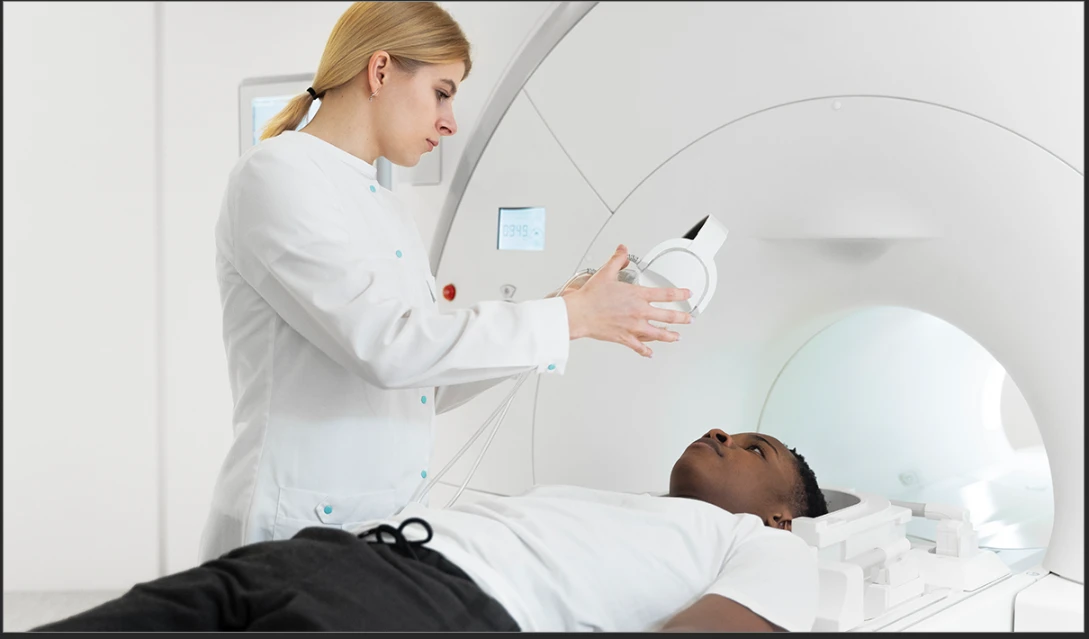
AI is transforming how radiologists, pathologists, and imaging specialists detect and diagnose disease. But choosing the right AI medical imaging solution is far from simple. Between regulatory hurdles, workflow integration challenges, and the flood of new vendors, knowing what defines a high-value product can save months of trial and error. This guide distills the strategy clinicians need to identify, evaluate, and implement the best AI-powered imaging analysis tools for real-world use—solutions that improve diagnostic speed and accuracy while staying secure, compliant, and efficient.
Understanding AI Medical Imaging and Its Clinical Impact
AI medical imaging uses computer vision and machine learning algorithms to interpret X-rays,
MRIs, CT, and pathology slides at scale. These systems identify, classify, and quantify
abnormalities such as tumors, fractures, and occlusions, often at higher accuracy and speed than
manual review alone.
Radiology leads the field in AI adoption—roughly three out of four FDA-cleared medical AI
devices now serve imaging workflows. For example, AI lung nodule models have shown 26%
faster detection while catching clinically relevant findings often missed during initial reads.
Hospitals worldwide are deploying AI-assisted analysis across modalities to reduce backlogs,
triage urgent cases, and support clinical decision-making.
SARC MedIQ delivers these capabilities through clinically validated algorithms that integrate
directly into radiology workflows to enhance precision and consistency at scale.
Key Clinical Use Cases and Benefits of AI Imaging Solutions
AI imaging solutions span many practical applications in routine care, including:
- Triage: Automatically flag critical cases, such as head bleeds or pulmonary embolisms, to prioritize radiologist attention. For instance, Aidoc reported stroke alerts reaching clinicians in under 60 seconds from image acquisition.
- Detection and Segmentation: Identify lung nodules, liver lesions, or bone fractures and outline region boundaries, supporting more consistent reporting.
- Image Enhancement: Apply denoising and reconstruction models that shorten MRI or CT exam times while preserving quality.
- Quantification: Standardize measures for disease progression, such as tumor volume or plaque burden.
Clinically, AI tools have achieved up to 21% improved cancer detection rates across studies and can accelerate MRI exams by several minutes, improving throughput and patient comfort.
SARC MedIQ’s imaging intelligence platform supports these use cases with end-to-end interoperability and continuous model performance monitoring.
Essential Evaluation Criteria for AI Medical Imaging Tools
Selecting an AI system requires structured evaluation across clinical, technical, and regulatory dimensions.
| Category | Key Evaluation Criteria |
| Clinical validation | Look for peer-reviewed, externally validated studies across diverse patient cohorts. Favor tools tested beyond vendor data. |
| Workflow integration | Ensure seamless interoperability with existing PACS, RIS, and EHR systems. The AI should insert results into normal worklists, not add extra steps. |
| Regulatory and privacy compliance | Verify FDA clearance or CE Mark. Require HIPAA and GDPR adherence for all data handling. |
| Technical hygiene | Confirm robust DICOM compatibility, model versioning, and secure API data exchange. |
| Vendor credibility | Seek a proven vendor with healthcare experience, real-world references, and transparent performance metrics. |
| Total cost of ownership | Include license fees, onboarding, support, and future scalability in your analysis. |
A well-evaluated system should fit seamlessly into the imaging workflow, safeguard patient data, and demonstrate measurable improvements supported by credible evidence. SARC MedIQ emphasizes transparent validation and interoperability at every stage to align with these clinical and technical standards.
Step-by-Step Process to Select the Right AI Medical Imaging Solution
- Define the clinical problem—identify target tasks such as stroke triage or lung nodule detection and establish clear evaluation metrics.
- Screen vendors for FDA or regulatory clearance and independent performance validation.
- Test integration by simulating DICOM and PACS workflows to confirm compatibility and latency.
- Pilot in a live environment to observe real-time outcomes, including false positive rates and clinician feedback.
- Validate cybersecurity protocols and data governance clauses, including model update terms.
- Plan for user training and monitoring, supported by rollback pathways in case of unexpected model drift.
Pilot testing using typical clinical datasets—not idealized samples—is critical to assessing true workflow performance and efficacy. SARC MedIQ supports structured pilot programs, helping institutions measure outcomes and integration efficiency before full rollout.
Integrating AI into Existing Imaging Workflows and Systems
Successful AI adoption means integration, not disruption. AI findings should appear directly in existing image viewers, structured reports, or dashboards, accessible within radiologists’ native environments.
Interoperability—the seamless exchange of patient and imaging data among PACS, RIS, EHR, and AI tools—is vital to prevent data silos. Many institutions now consolidate multiple FDA-cleared algorithms on a single AI platform, enabling centralized deployment, monitoring, and analytics without complicating user workflows.
SARC MedIQ’s platform architecture is designed for this interoperability, allowing consolidated deployment across imaging modalities with minimal IT overhead.
Regulatory Compliance, Data Security, and Privacy Considerations
Three standards govern safe AI integration:
- FDA clearance confirms a device meets safety and performance criteria for clinical use.
- CE Mark indicates compliance with EU directives for medical technology.
- HIPAA mandates protection of patient health information in the United States, while GDPR ensures data privacy across Europe.
Over 950 AI medical devices held FDA clearance as of 2024, many through the 510(k) pathway. Yet, regulatory approval alone doesn’t guarantee clinical benefit—continuous real-world validation remains essential. With nearly 60% of health systems citing data privacy as their top AI concern, due diligence on vendor security frameworks is nonnegotiable.
| Compliance Checkpoint | What to Verify |
| Regulatory status | FDA/CE documentation, intended use |
| Data protection | HIPAA/GDPR measures, audit logs |
| Access control | User authentication, encryption, traceability |
| Vendor certification | SOC 2 / ISO 27001 if applicable |
SARC MedIQ’s infrastructure meets these regulatory and security benchmarks, supporting healthcare organizations with compliant, auditable data handling.
Technical Best Practices for Reliable AI Deployment
Technical robustness underpins clinical reliability. Follow these best practices:
- DICOM preprocessing: Extract BitsAllocated, BitsStored, HighBit, and PixelRepresentation before pixel conversion; apply proper sign correction when required.
- HU windowing: Select tissue-based ranges—lung (−1000 to 400 HU), soft tissue (−150 to 250 HU)—to optimize contrast.
- Preserve padding pixels: Avoid rescaling placeholder values to maintain image integrity.
Beyond preprocessing, maintain:
- DICOM integrity checks before inference.
- Inference logging for audit trails.
- Version control for deployed models.
- MLOps governance for automated updates and rollback protocols.
Together, these practices ensure traceable, compliant, and auditable AI operations suitable for regulated environments.
SARC MedIQ applies these standards through built-in MLOps governance to maintain model accuracy and traceability across installations.
Vendor Selection: Reliability, Support, and Cost Factors
A trustworthy vendor should pair proven clinical performance with dependable support. Evaluate partners on:
Factor | What to Assess |
| Reliability | Track record, number of clinical installations, uptime guarantees |
| Support | Response times, update frequency, training resources |
| Cost | Transparent pricing across licenses, onboarding, and service bundles |
| Flexibility | Contract terms for scaling, integration, or exit options |
Vendor lock‑in risk can hinder progress and inflate costs. Negotiate contract clauses for data portability, retraining rights, and performance transparency to safeguard long-term flexibility.
SARC MedIQ provides adaptive support models and open data interoperability to reduce vendor dependency and simplify scaling.
Implementation Strategies and Ongoing Governance for AI Imaging
Implementation success depends on continuous oversight rather than one-time deployment. Start with a pilot using routine datasets to uncover real-world workflow effects. Collect metrics such as alert latency, false positives, and radiologist satisfaction.
Establish an AI governance committee responsible for model performance tracking, bias audits, and user feedback. Include clauses for explainability, data use rights, and liability management within vendor agreements. A robust governance framework ensures ongoing safety, fairness, and adaptability as AI regulations evolve.
SARC MedIQ aligns with institutional governance frameworks by providing reporting tools and audit features to support transparency and compliance.
Measuring Clinical and Operational Outcomes of AI Integration
To justify investment, organizations must track tangible performance and efficiency outcomes. Key performance indicators include:
| Metric | Definition | Example Outcome |
| Time-to-notification | Seconds from scan to AI alert | Stroke alerts within 60 seconds |
| Sensitivity & Specificity | Diagnostic accuracy metrics | 21% increase in cancer detection |
| False positive rate | Incorrect alerts proportion | Reduced review fatigue |
| Operational throughput | Number of studies processed per day | MRI sessions shortened by 20% |
| User satisfaction | Clinician confidence and ease of use | Reported faster workflows |
The ultimate objective is sustained clinical and operational improvement, verified through continuous performance monitoring. SARC MedIQ supports users with built-in analytics dashboards to track these outcomes and guide continuous improvement.
Frequently Asked Questions About AI Medical Imaging Solutions
What technical requirements do AI medical imaging systems need?
AI imaging systems must integrate with DICOM, PACS, and often GPU-powered servers so that findings appear directly in the clinician’s workflow. SARC MedIQ’s platform is designed for direct plug-in compatibility within these environments.
How are AI imaging tools validated and evaluated for clinical use?
They undergo peer-reviewed external studies and pilot testing in real clinical settings to prove performance accuracy and reliability. SARC MedIQ solutions follow these same validation standards.
Are AI medical imaging tools FDA-approved, and what does that mean?
FDA approval confirms regulatory safety and performance standards but doesn’t ensure day-to-day clinical value; post-market validation remains key. SARC MedIQ maintains this continuous validation across deployments.
What are the main applications and benefits in medical imaging?
AI supports detection of cancers, lesions, and acute conditions with faster turnaround and improved diagnostic precision—capabilities reflected in the SARC MedIQ suite of imaging tools.
What risks and challenges exist with AI imaging solutions?
Key challenges include privacy compliance, algorithmic bias, integration complexity, and the need for constant performance monitoring. SARC MedIQ mitigates these risks through secure infrastructure and transparent model governance.
By approaching AI selection strategically—anchored on evidence, integration, and governance—clinicians can confidently adopt solutions that enhance diagnostic excellence while safeguarding patient trust.