The Digital Evolution of PACS Medical Imaging: Streamlining Care Through Innovation 

The Pressure to Evolve Has Never Been Greater 

In today’s fast-moving healthcare environment, transformation isn’t optional — it’s expected. Hospitals and clinics are under pressure to deliver care that is faster, more personalized, and available across locations. At the same time, they must manage growing data volumes, rising patient expectations, and increasing clinician burnout. 

Digital tools like AI, Cloud Based PACS Medical Imaging , and virtual care solutions promise relief — but only if they integrate seamlessly into clinical workflows. Otherwise, they risk becoming just another layer of complexity. 

At SARC MedIQ, we believe innovation should feel invisible. When it works, it fades into the background — empowering doctors, not overwhelming them. 

Why Workflow Still Rules the Digital Frontier 

Healthcare leaders are adopting more digital tools than ever, but many still face a familiar frustration: disjointed systems, multiple logins, and fragmented data. It’s not about how many technologies you implement — it’s about how well they work together. 

That’s where SARC MedIQ’s technology for PACS Medical Imaging stands apart. Our platform is built with workflow orchestration at its core, not added as an afterthought. We design with radiologists in mind, ensuring that tools like AI and diagnosis automation are embedded into a unified experience that supports faster, smarter care. 

How to Fix Radiology Workflows using AI and Cloud Computing

The Foundations of a Modern Medical Imaging Experience 

To build a truly modern imaging environment, three pillars are essential: 

 Cloud-Native Infrastructure 

SARC MedIQ’s cloud-first architecture allows hospitals and clinics to scale on demand, access imaging data from anywhere, and simplify maintenance, backups, and updates. It’s secure, agile, and built for today’s mobile workforce. 

AI-Powered Diagnosis Automation 

From prioritizing urgent cases to auto-filling reports, our AI automates what’s repetitive — so radiologists can focus on what’s clinical. It’s not about replacing professionals; it’s about letting them do more of what matters. 

Seamless Interoperability 

We believe data shouldn’t be locked in silos. SARC MedIQ connects across EHRs, RIS, and partner platforms — enabling data to move freely, securely, and in context. 

More Data ≠ Better Care — Unless It’s Usable 

The healthcare world isn’t short on data. The real challenge is making that data actionable. Radiologists shouldn’t have to toggle between systems or dig through records to make a decision. 

SARC MedIQ brings imaging, clinical context, and AI insights into one interface — so decisions happen faster, with greater confidence. 

Built for the Ones Who Actually Use It 

Doctors don’t need another dashboard. They need fewer. 

We built SARC MedIQ to simplify the entire imaging process. That means: 

When systems are intuitive, staff burnout decreases, adoption rises, and patients benefit. 

Digital Strategy That Actually Works 

The success of any digital initiative depends on more than software. It requires a strategy. 

At SARC MedIQ, we help our partners align digital investments with clinical and operational goals — from implementation to long-term impact. That includes: 

Because it’s not just about having the right tools — it’s about making them work for your people. 

Conclusion: Simpler Workflows. Smarter Imaging. Better Care. 

The future of medical imaging is not just digital — it’s intelligent, integrated, and clinician-centered. 
SARC MedIQ is proud to lead that shift. 

If your imaging systems still feel like a juggling act, it’s time to rethink what’s possible. 
Let’s build something better — together. 

The future of medical imaging is not just digital — it’s intelligent, integrated, and clinician-centered.

SARC MedIQ is proud to lead that shift.

If your imaging systems still feel like a juggling act, it’s time to rethink what’s possible.

Let’s build something better — together.

More than 1,500 physicians already rely on SARC MedIQ to simplify diagnostics, speed up reporting, and improve patient care — and that number is growing every day. See how your practice can benefit by booking a Demo for PACS Medical Imaging today.

The Power of Enterprise Medical Imaging: Connecting Care Across Multi-Site Health Systems with Cloud + AI 

Why Enterprise Imaging Is No Longer Optional 

As imaging volumes rise and care teams become increasingly distributed, healthcare organizations are facing a new kind of challenge: fragmentation. Images are stored in different silos, systems don’t talk to each other, and radiologists are stretched thin—jumping between platforms, locations, and disconnected tools.

That’s where enterprise imaging comes in. It’s not just a buzzword—it’s a critical strategy that enables seamless collaboration, faster diagnoses, and better patient care across even the most complex health systems.

And with AI-powered, cloud-native platforms like SARC MedIQ, that strategy is more accessible and scalable than ever.

What Is Enterprise Imaging—And Why Now? 

Enterprise imaging is the unified management, access, and sharing of medical images across all departments, specialties, and sites. Instead of using fragmented PACS or modality-specific tools, enterprise imaging centralizes everything into a single ecosystem. 

In a post-pandemic world, this shift is more urgent than ever: 

By breaking down silos and consolidating workflows, enterprise imaging provides a complete longitudinal view of a patient’s history—driving smarter clinical decisions and improving outcomes system-wide. 

Smart Worklist Distribution: The Engine of Enterprise Efficiency 

Dynamic caseloads demand dynamic solutions. In multi-site systems, radiologists often face unbalanced workloads, leading to delays in reporting and clinician burnout. 

An enterprise-wide intelligent worklist solves this by: 

How SARC MedIQ Helps 

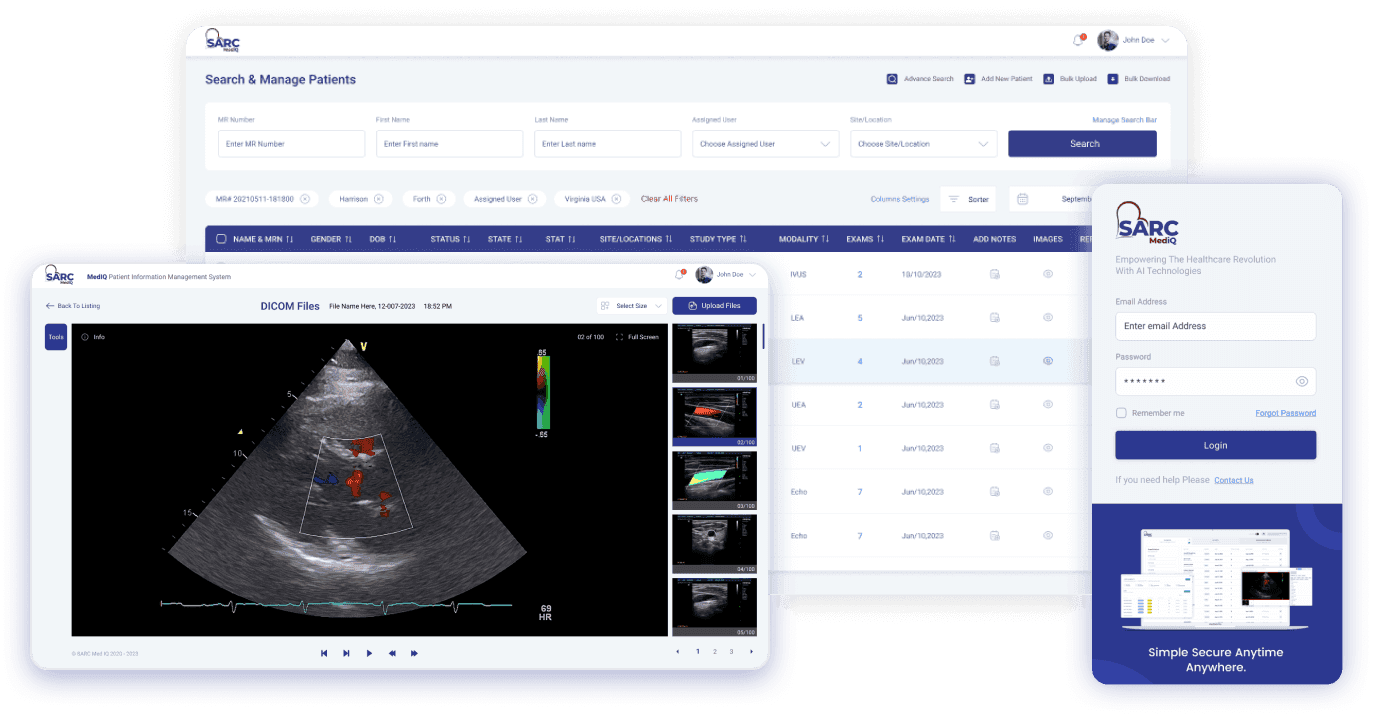
SARC MedIQ uses AI-enhanced worklist orchestration and single sign-on access to give radiologists a unified, streamlined workspace—across hospitals, clinics, or mobile setups. The right case goes to the right reader, at the right time—every time. 

Read From Anywhere, Diagnose Without Delay 

Cloud-based imaging has redefined what’s possible. With a zero-footprint, browser-based diagnostic viewer, enterprise imaging enables radiologists to review high-resolution studies securely—without needing VPNs, downloads, or local hardware. 

This allows: 

How SARC MedIQ Helps 

SARC MedIQ’s cloud-native viewer integrates directly into the enterprise workflow, supporting cross-platform access and real-time collaboration—whether the radiologist is in a reading room or halfway across the country. 

Unified Image Access—Break Down Silos, Improve Care 

Siloed data is more than a workflow issue—it’s a risk to patient safety. Without centralized access, clinicians may miss historical comparisons, duplicate imaging, or experience delays in diagnosis. 

Enterprise imaging platforms eliminate this by: 

 How SARC MedIQ Helps 

SARC’s ShareSecure allows clinicians to send imaging studies via an encrypted, one-click link. No CDs. No upload portals. Just instant collaboration that bridges gaps between care teams, facilities, and referring physicians. 

Built to Scale: Cloud Storage, Security & Compliance 

A truly enterprise-grade solution must also protect data and scale with growth. From disaster recovery to compliance, image storage is a foundational pillar of imaging operations. 

Modern platforms must deliver: 

 How SARC MedIQ Helps 

SARC MedIQ supports auto-archiving, image lifecycle management, and disaster recovery readiness—whether you’re running a small clinic network or a multi-hospital system. Data is accessible, protected, and audit-ready—always. 

Why Enterprise Imaging Is the Future of Connected Care 

Large health systems can no longer afford disjointed workflows. Every disconnected tool, delayed report, or duplicated image adds to clinician burden—and risks patient outcomes. 

With enterprise imaging, organizations gain: 

Platforms like SARC MedIQ make that transformation attainable—without costly rip-and-replace strategies. As a white-label, fully integrable ecosystem, SARC MedIQ empowers providers to build their own imaging infrastructure that’s unified, modern, and fully under their control. 

5 Radiology Workflow Bottlenecks You Can’t Afford to Ignore – and How to Fix Them with AI & Cloud Innovation 

Radiologists today are under more pressure than ever—managing increasing imaging volumes, tighter deadlines, and rising expectations for speed and accuracy. 
But often, the biggest threats to radiology efficiency aren’t the most visible. From documentation fatigue to fragmented systems, radiology workflow bottlenecks are quietly slowing teams down—and putting patient care at risk. 

The good news? The right technology can change everything. 

SARC MedIQ is a platform built specifically to eliminate these friction points. Through AI-powered reporting, seamless cloud PACS, and secure sharing tools, we help radiology teams regain control, reduce burnout, and accelerate clinical workflows. 

Bottleneck 1: Manual Documentation & Dictation Drains Time 

The Challenge 

Radiologists often still document manually or use legacy dictation tools that require tedious editing and formatting. These outdated processes eat up valuable time and add directly to cognitive overload and burnout. 

The Impact 

More time spent on documentation means less time diagnosing, which delays reports, increases fatigue, and reduces job satisfaction. 

Solution: AiDictate by SARC MedIQ 

Our AI-driven dictation and reporting tool transcribes speech in real time using a medical-specific lexicon. With built-in templates, automated impression checks, and structured summary generation, radiologists can create review-ready reports in minutes—not hours. 

Radiologists simply speak, and AiDictate handles the rest. No scribes. No delays. Just fast, compliant reporting. 

Bottleneck 2: Juggling Multiple Platforms Slows Workflow 

The Challenge 

Traditional radiology environments require switching between PACS, EMRs, viewers, and third-party platforms to access and interpret studies. This fragmentation slows down workflows, increases training time, and raises error risk. 

The Impact 

Disjointed systems reduce productivity, introduce unnecessary clicks, and create bottlenecks in diagnosis and reporting. 

Solution: SARC PACS Flow with Built-In Single Sign-On 

SARC PACS Flow unifies imaging, viewing, and reporting in one cloud-native platform. With single sign-on access, users can log in once and seamlessly navigate everything—from reviewing images to generating reports—without needing to jump between systems. 

This eliminates login fatigue, reduces complexity, and keeps radiologists focused on clinical care—not on navigating multiple dashboards. 

How to Fix Radiology Workflows using AI and Cloud Computing

Bottleneck 3: Delays in Sharing Imaging with Referring Physicians 

The Challenge 

Many radiology departments still rely on CDs, physical media, or unsecured email to share imaging studies with external providers—causing delays and communication breakdowns. 

The Impact 

Slow sharing processes frustrate referring physicians, stall treatment planning, and risk patient safety. 

Solution: SARC ShareSecure 

SARC ShareSecure lets radiologists send imaging studies to any provider, anywhere in the world, via a secure, one-click link. No CDs. No downloads. No hassle. 

This reduces image delivery time by up to 90% and ensures referring physicians have immediate access to diagnostic data when it matters most. 

Bottleneck 4: Extended Time on Complex Cases 

The Challenge 

As imaging volumes grow, complex cases naturally require more attention. But without support tools, radiologists face growing backlogs and mounting pressure—impacting turnaround times. 

The Impact 

Delays in interpreting advanced studies can reduce diagnostic accuracy and slow down care pathways. 

Solution: SARC AiReports 

SARC AiReports assists radiologists with pre-analyzed imaging, automatic annotation, and structured report generation. From fractures to soft tissue abnormalities, the platform highlights key areas of interest—speeding up interpretation without replacing clinical judgment. 

It’s a powerful co-pilot for busy radiologists, helping them handle high volumes without compromising quality. 

Bottleneck 5: SOAP Notes Are Still Manually Entered 

The Challenge 

Even today, SOAP notes are often typed manually after consultations—taking time and increasing the risk of missed details. 

The Impact 

Manual note-taking reduces patient facetime, contributes to documentation errors, and slows down administrative workflows. 

Solution: AiDictate Expanded Capabilities 

With real-time speech-to-text functionality, AiDictate can also support rapid creation of structured clinical notes. Integrated with EMR systems and accessible on desktop or mobile, it streamlines SOAP note documentation—saving time while improving consistency. 

Final Thoughts: Radiology Bottlenecks Are a Patient Care Problem 

Workflow inefficiencies don’t just hurt productivity—they delay care. 

By integrating AI-powered tools like AiDictate, cloud-native PACS with single sign-on access, and secure image sharing, SARC MedIQ empowers radiology teams to reclaim their time and focus on what really matters: faster diagnoses, lower stress, and better patient outcomes. 

If your team is still juggling outdated tools and fragmented systems, now’s the time to modernize. 

Let SARC MedIQ help you simplify, unify, and elevate your radiology workflow. 

Traditional Problems with Radiology Imaging Requests: Why No One Else Wants to Do It

Fulfilling patient radiology/imaging requests has always presented problems. Those problems range from the cost of labor and the need for on- site resources to concerns with postage, mail delivery timeframe, and lost or damaged CD/USB media. Additionally, Providers and/or copy service companies are pulled away from their primary tasks to answer phone calls and in-person questions from patients and other requestors about request status, mail delivery status, lost or broken CD/USB media, the need for multiple copies of media for various doctor appointments, and technical issues such as how to install DICOM software or view imaging on a personal device. The result? Most medical records copy services insist on leaving this particular burden for the Provider to manage, unless the Provider mandates otherwise.

Why eRequest LLC wants to process your imaging requests?

IMOD (Imaging on Demand) eliminates traditional barriers. Unlike any other medical copy service company, we can offer same-day processing of imaging requests.

Case Example

BACKGROUND: Carrell Clinic located in Dallas, TX, presented the following:
• Processed 200+ imaging CDs per month
• Provided all imaging on CD media
• Requestor breakdown: 18% patient CD pick-up (often urgent due to upcoming appointments); 38% patient CD mail; 20% continuing care (9% STAT); 24% third party requestors
• Dedicated 1.5 FTEs

RESULTS: After outsourcing their imaging requests to eRequest LLC, Carrell Clinic cited the following benefits of the IMOD solution:

Instant Empowerment of Patient Choice

IMOD gives patients more control. IMOD lets patients easily transport their own medical images via a secure browser link, which enables them to make more informed choices about their healthcare.

Cloud based PACS : A Revolution in Medical Imaging Information Systems

In the fast-evolving world of healthcare technology, staying up-to-date with the latest innovations is essential. One such innovation that has transformed the way medical imaging is managed and accessed is Picture Archiving and Communication System (PACS). PACS is a critical component in modern healthcare facilities, enabling the remote retrieval of medical images and associated data. In this blog, we will explore the world of PACS, its types, advantages, and why cloud based PACS is the future. We will also introduce you to SARC MedIQ, a leading name in the field.

What is PACS?

Picture Archiving and Communication System (PACS) is a revolutionary medical imaging technology that combines hardware and software to streamline the acquisition, storage, and retrieval of medical images using the Digital Imaging and Communications in Medicine (DICOM) standard. This innovative system has been pivotal in modernizing healthcare facilities and improving patient care.

Advantages of PACS

  1. Streamlined Workflow: PACS eliminates the cumbersome manual process of storing and retrieving physical film archives. It streamlines the workflow, enabling healthcare professionals to access images quickly and efficiently.
  2. Enhanced Collaboration: PACS facilitates collaboration among healthcare providers. Images can be easily shared and accessed, leading to improved patient care and better professional opportunities.
  3. Cost Savings: By digitizing medical image storage, PACS reduces costs associated with film, physical storage, and maintenance of film archives.
  4. Faster Diagnoses: Speed is crucial in healthcare. PACS allows specialists to review images remotely, expediting diagnoses and improving overall patient care.
  5. Secure Storage: With the transition to digital storage, patient data is more secure. Cloud-based PACS, in particular, offers enhanced security features, protecting against data loss and unauthorized access. Click here to Read Benefits of PACS in detail.

Cloud Based PACS

Cloud Based PACS represents the next evolution of PACS technology. Instead of relying on traditional on-premises servers and infrastructure, cloud-based PACS operates on remote cloud computing services. This paradigm shift offers a host of benefits, transforming how healthcare professionals’ access and manage medical images.

medical-imaging-solutions

Dicom Cloud Storage

One of the core components of cloud based PACS is Dicom Cloud Storage. This technology provides ample storage capacity, ensuring that healthcare facilities can securely store vast amounts of medical image data. With cloud-based Dicom storage, the need for on-premises hardware and backup systems diminishes, leading to cost savings and improved data security.

Onsite vs. Offsite PACS

The choice between onsite and offsite PACS depends on the specific needs of healthcare facilities. Onsite PACS involves maintaining servers and infrastructure within the facility, offering greater control but potentially higher costs. In contrast, offsite PACS, particularly cloud-based solutions, shift the responsibility of infrastructure maintenance to the service provider, offering cost-effectiveness and accessibility.

Enterprise Medical Imaging Solutions

Enterprise medical imaging solutions encompass a comprehensive approach to managing medical images across large healthcare organizations. PACS plays a pivotal role in these solutions by providing a unified platform for image storage and retrieval. By embracing enterprise medical imaging solutions, healthcare organizations can achieve greater integration between departments and facilities, resulting in improved productivity and patient care.Explore our SARCMEDIQ’s advanced PACS solutions and take the first step toward a seamless, efficient, and patient-centric healthcare experience.

Is Cloud Storage Right for My Medical Imaging Modality?

Considering cloud storage for your medical imaging modality? Harness the robust security of Blockchain technology to instill trust in your data. Embrace seamless integration and accessibility while prioritizing patient privacy. Our solution ensures tamper-proof records and data accuracy, aligning with industry regulations. Elevate your medical imaging practices with the confidence of Blockchain, empowering you to securely store, share, and access critical data. Join the future of healthcare technology, where trust and innovation converge for better patient outcomes.